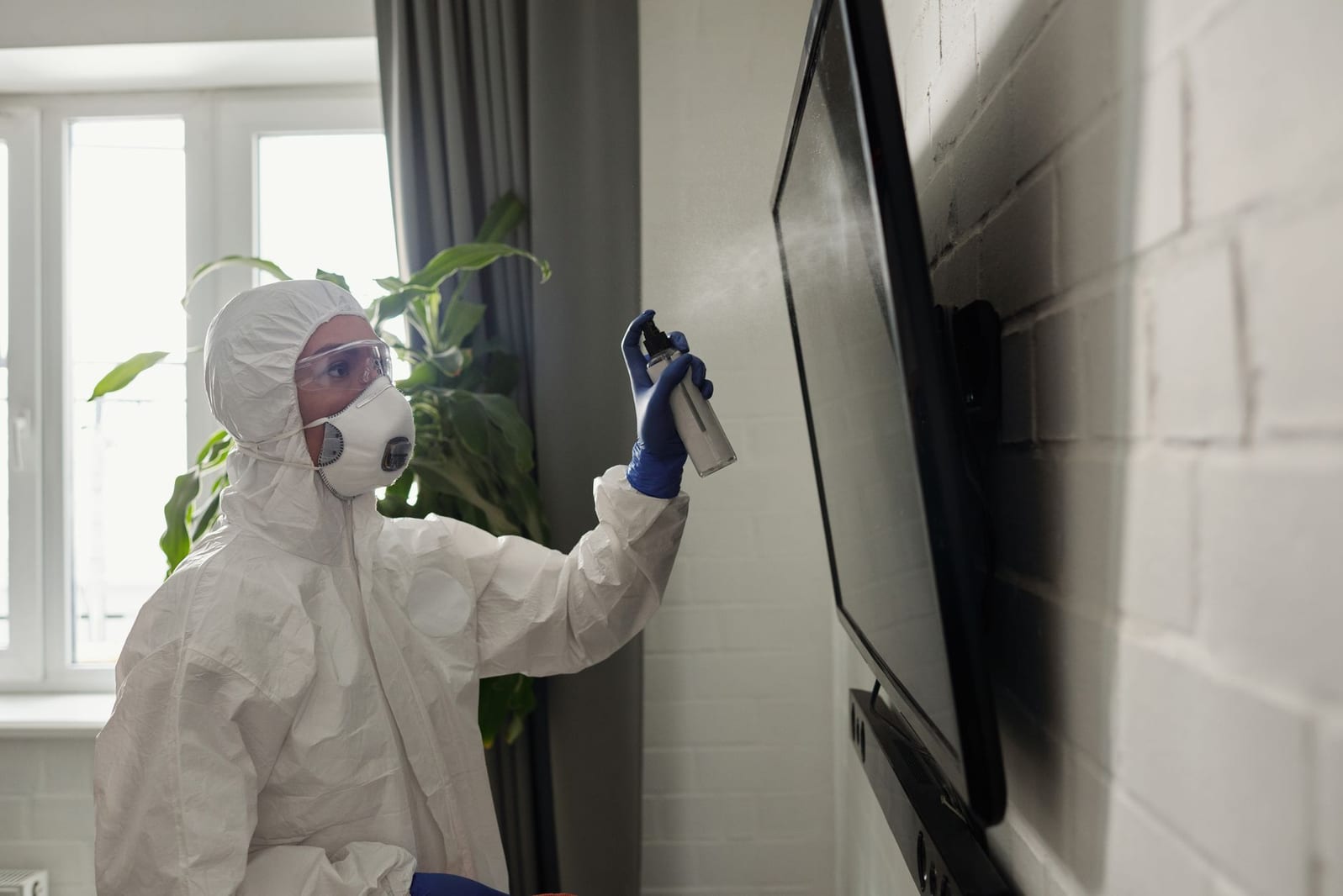
A fire loss is almost never just fire damage. In nearly every case, the water used to extinguish the fire creates a second layer of damage on top of the soot and smoke — meaning a fire-restoration job has to run water-damage extraction and drying alongside soot and smoke cleanup, not as an afterthought. We treat the two as a single combined loss from the first walkthrough, because ignoring the water side while focusing only on visible soot leaves the same mold-growth risk as any untreated water-damage job.
Smoke and soot residue behaves differently depending on what burned and how hot the fire got — protein-based smoke from a kitchen fire leaves a different residue than the acidic soot from a structure fire involving synthetic materials, and each responds to different cleaning chemistry. For lingering odor that's worked its way into porous materials (drywall, insulation, fabric), surface cleaning alone often isn't enough; we use methods like ozone treatment or thermal fogging, which neutralise odor molecules that have penetrated materials rather than just masking the smell.
Before any cleanup or rebuild begins, we do a structural assessment — checking whether framing, flooring and load-bearing elements were compromised by heat or by the firefighting water, since starting cosmetic cleanup on a structure that isn't sound just creates rework. Where contents (furniture, documents, electronics) are salvageable, we coordinate with our contents-restoration process for pack-out, cleaning and return, rather than treating the structure and the contents as unrelated jobs.
How much does fire damage restoration cost in NYC?
$4–$7
Per sqft (national); average ~$5.50/sqft. Total project cost typically $3,098–$51,243 (national average ~$27,091) — extremely wide because scope ranges from smoke-only to full structural rebuild; lead with the per-sqft figure, not the total-job range.
US national figure — NYC typically runs higher.
Market range — not our quote
This is a market range synthesised from published cost guides — not a quote from this provider. The actual price depends on an in-person or photo-based inspection.
US NATIONAL — NYC typically higher, but no NYC premium figure sourced for this specific service. Total-job range is very wide (small smoke job vs. structural fire) — lead with the per-sqft figure on-site, not the total-job range, to avoid misleading readers.
What drives the price
- Extent of structural vs. cosmetic damage
- Smoke/soot penetration into materials
- Water damage from firefighting efforts (often combined job)
- Labor share of cost (50–70% of total per industry guides)
Signs you have a fire damage restoration problem
- A fire — kitchen, electrical or structural — has left soot, smoke residue or a lingering odor
- Water damage from firefighting efforts is present alongside fire and smoke damage
- Smoke smell persists in the space days after the fire, even with windows open and fans running
- You need a professional structural assessment before repair or rebuild work can start
- Furniture, documents or electronics were exposed to smoke or fire and may still be salvageable
Why Manhattan sees this
Multi-unit NYC and NJ buildings mean a fire in one unit routinely produces smoke damage in adjacent units and shared hallways even when the fire itself was contained, and we assess neighbouring spaces as part of any building-wide fire-damage response.
Older buildings with plaster walls and original woodwork present different soot-cleaning and odor-treatment challenges than newer drywall construction — porous plaster and old wood trim hold odor more stubbornly, which factors into the treatment method we choose.
Insurance claims after a fire loss typically require detailed documentation of both the fire/smoke damage and any firefighting water damage — we photograph and log both as one combined scope so the claim reflects the full loss.